What is SEO? Definition, Mechanism, History, Implementation!

Musfikur Rahman
May 14, 2026
Search Engine Optimization (SEO) is the technical and creative process of improving a website’s visibility within organic search results. It functions through search engine algorithms that evaluate relevance, authority, and technical health to determine rankings.
This optimization aligns a site’s digital architecture with how crawlers index and retrieve information, ensuring high-quality organic traffic. Ultimately, effective SEO transforms a platform into the primary destination for specific intent-based queries.
Table of Contents
ToggleSearch Engine Optimization (SEO) is the methodology of aligning digital content with Search Intent to satisfy a user’s specific query. Furthermore, this process optimizes User Experience (UX) and Keywords to ensure a page satisfies both linguistic and technical requirements.
This means that a website gains Digital Authority, securing a higher placement on the SERP (Search Engine Result Page),. Think of it like a library uses a card catalog to help you locate a specific book, SEO organizes the web so searchers find your exact resource.
Search Engine Marketing (SEM) is a broad term that covers both Organic Traffic and Paid Advertisements. While SEM relies on the Pay-Per-Click (PPC) model to buy immediate visibility through bidding, SEO focuses on earning that space naturally through relevance. Unlike the instant but temporary boost from ads, SEO is built for Cost-efficiency and sustainable Long-term Growth.
This means that once a PPC budget runs out, your visibility disappears; however, an optimized asset continues to attract users without ongoing costs.
Feature | SEO (Organic) | SEM / PPC (Paid) |
Cost Basis | Investment in content & tech | Paying for every click (CPC) |
Speed | Incremental growth | Instant SERP placement |
Sustainability | High; persists long-term | Low; stops when funding ends |
Think of SEM like renting a house—you get immediate shelter, but only as long as you keep paying the rent. On the other hand, SEO is like building and owning your home; it takes time to build equity, but eventually, you own the asset. This distinction is vital for understanding how search engine algorithms process different types of traffic.
Search engine algorithms operate through a continuous cycle of Discovery, Storage, and Retrieval. It all begins with Crawling, where automated programs known as Googlebot traverse the web to find new or updated content by following hyperlinks. Once the data is collected, the process shifts to Indexing, which involves parsing and storing the information in a massive database.
Finally, the algorithm performs Ranking by assessing hundreds of signals to deliver the most relevant result for a user’s query.
Stage | Process | Primary Objective |
Crawling | Discovery | Finding URLs and scanning technical code |
Indexing | Storage | Categorizing content and understanding context |
Ranking | Retrieval | Sorting pages based on relevance and authority |
Think of a search engine as a digital librarian who first discovers every new book published, categorizes them by topic, and then recommends the perfect title when you ask a specific question. Understanding this technical journey is essential for mastering how search engines perceive your website.
Search Engine Ranking Factors constitute a multidimensional scoring system used to evaluate and prioritize indexed content. Once a page is stored, the algorithm prioritizes Relevance by analyzing how accurately the content satisfies the specific User Intent behind a query.
However, relevance alone is insufficient; the system simultaneously measures Authority, often quantified through the quality of Backlinks and the framework of E-E-A-T (Experience, Expertise, Authoritativeness, and Trustworthiness).
Ranking Factor | Entity Attribute | Impact on User |
Relevance | Contextual Alignment | Direct answer to the search query |
Authority | Backlink Profile | Verification of information accuracy |
UX Signals | Page Speed / Mobile | Ease of access and readability |
Technical performance serves as a prerequisite for these evaluations. Elements such as Page Speed and Mobile-friendliness function as foundational signals that impact the overall user experience.
To understand this, consider a job interview where the recruiter verifies you have the exact skills required for the role (Relevance) while also checking your professional recommendations to ensure you are reliable (Authority). This balance ensures the algorithm delivers results that are both helpful and technically accessible.
“These ranking decisions are based on several pillars, including technical health, content relevance, and backlink authority, which we will explore in detail in the technical seo sections.”
SEO is a high-yield business growth strategy that converts technical relevance into long-term financial equity. In today’s digital landscape, SEO is essential because it prioritizes Sustainable Growth by establishing a permanent digital presence. By increasing Organic Visibility, you significantly reduce the Customer Acquisition Cost (CAC), as search engines deliver qualified leads without the recurring expense of paid advertising.
The strategic importance of maintaining a rigorous optimization framework lies in these core benefits:
SEO is like planting a fruit tree; while it requires initial labor and patience to take root, a mature tree provides a consistent harvest for years without the need to purchase individual fruits daily. This structural advantage ensures that a business remains competitive regardless of fluctuating market costs. Establishing these benefits necessitates a deep understanding of the specific pillars that support a successful digital strategy.

Search Engine Guidelines define the specific ethical frameworks that categorize optimization strategies into distinct approaches. These methodologies determine the risk profile and long-term viability of a domain’s presence within the SERP.
To maintain a secure digital asset, you must align your techniques with the Google Search Essentials to avoid algorithmic penalties or manual actions. Choosing an approach is comparable to the rules of a game; you can play fairly for a lasting victory or use prohibited tactics for a temporary advantage that risks permanent disqualification.
The primary types of optimization approaches include:
White Hat SEO is the foundation of sustainable digital growth by prioritizing long-term integrity and user-centric value. This methodology aligns strictly with Google’s Search Essentials, ensuring every tactic adheres to guidelines to prevent algorithmic penalties. By focusing on the human audience over the crawler, you build a resilient digital presence.
Consider it like building a business on a solid foundation; it ensures safety from regulatory changes while fostering genuine loyalty.
To execute this ethical framework, focus on these core pillars:
Black Hat SEO constitutes a set of manipulative practices designed to exploit search engine algorithm vulnerabilities for immediate ranking gains. These techniques intentionally violate official Search Essentials, prioritizing deceptive technical shortcuts over genuine user value.
While these methods may yield rapid visibility, they inevitably result in severe algorithmic penalties or permanent de-indexing from search results. Think of it as using performance-enhancing drugs in a race; you might cross the finish line first, but you will eventually be disqualified and banned from future competitions.
Grey Hat SEO constitutes a transitional methodology that occupies the space between ethical optimization and manipulative exploitation. This approach utilizes tactics that technically adhere to existing documentation but violate the underlying spirit of Search Engine Guidelines. The primary risk involves algorithmic evolution; as machine learning improves, these techniques frequently transition into prohibited practices.
White Hat and Black Hat SEO represent diametrically opposed philosophies regarding Digital Asset management and Search Engine Guidelines. The White Hat approach prioritizes Sustainable Growth by aligning with algorithmic requirements to provide genuine user value.
In contrast, Black Hat techniques focus on exploiting technical vulnerabilities for immediate, non-permanent rankings. Choosing between them is like deciding between an honest business that builds customer loyalty and a scam that makes a quick profit but eventually gets shut down.
Feature | White Hat SEO | Black Hat SEO |
Focus | Users & Long-term Value | Algorithms & Deception |
Content | Original & E-E-A-T based | Spun & Low-quality |
Links | Natural & Earned | Paid & PBNs |
Longevity | Sustainable & Stable | Short-term & Volatile |
Risk | Safe from updates | High risk of Penalties/De-indexing |
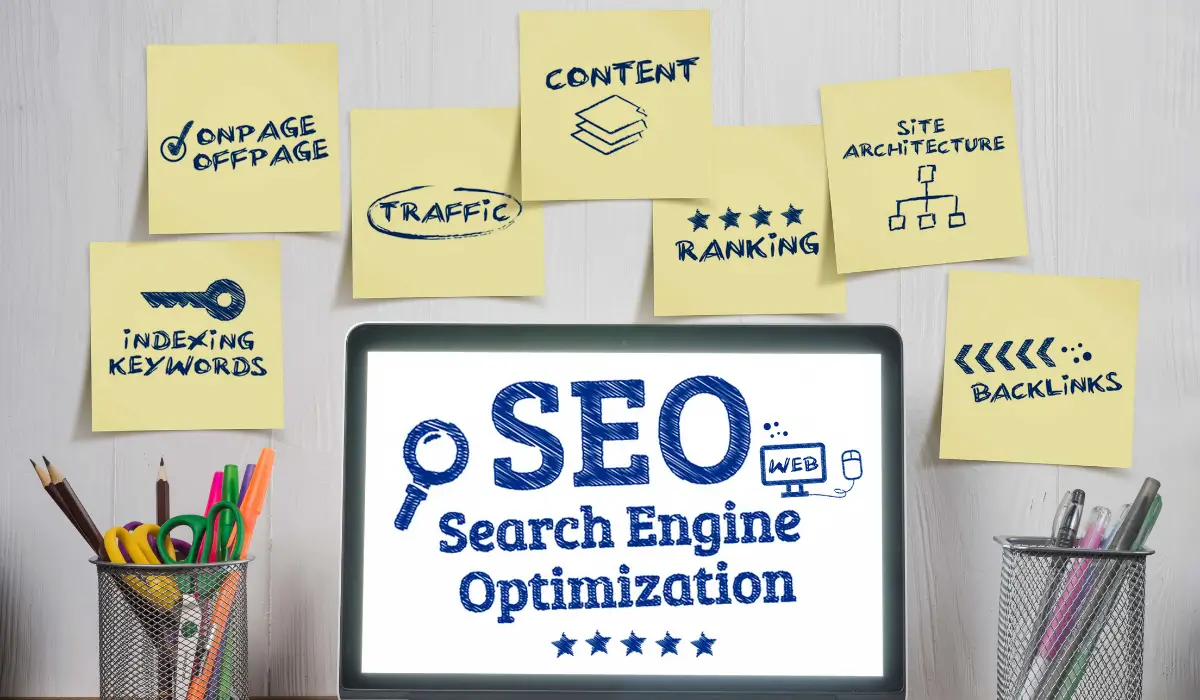
A successful Search Engine Optimization strategy relies on four foundational pillars that govern technical performance, relevance, and authority. Each pillar addresses a specific requirement of search engine algorithms to ensure comprehensive site optimization. To achieve peak Organic Visibility, you must maintain a balance across these technical and creative dimensions.
The 4 primary pillars include:
Technical SEO constitutes the backend optimization of a website’s infrastructure to ensure search engine spiders can efficiently discover, parse, and store content. This foundational layer focuses on Crawlability and Indexability, removing technical barriers that prevent a domain from appearing in the Search Index.
Core Web Vitals measure the real-world user experience through metrics like Largest Contentful Paint (LCP), First Input Delay (FID), and Cumulative Layout Shift (CLS). Optimizing these signals, alongside Server Response Time, ensures that page performance meets the threshold for modern ranking requirements.
Mobile-First Indexing means that Google predominantly uses the mobile version of a site’s content for indexing and ranking. Implementing Responsive Design ensures that the Document Object Model (DOM) remains consistent and accessible across all device viewports.
A Sitemap.xml is a machine-readable file that lists every essential URL of a website to facilitate rapid discovery. This file optimizes Crawl Budget management by providing a direct roadmap for automated crawlers to follow.
The Robots.txt file acts as a protocol for access control, instructing Googlebot on which directories to scan or ignore. Proper configuration prevents Crawl Bloat by restricting crawlers from accessing low-value or duplicate sections of the site.
Site Hierarchy determines the logical organization of information, which directly influences Click Depth and the flow of Link Equity. A flat architecture ensures that all critical pages are within three clicks of the homepage, maximizing their exposure to bots.
Indexability refers to the search engine’s ability to store a page in its database after crawling. Using Canonical Tags prevents duplicate content issues, while Noindex Tags instruct the engine to exclude specific pages from the public SERP.
HTTPS encryption, verified by an SSL Certificate, protects data integrity between the server and the user’s browser. Search engines treat secure protocols as a fundamental Trust Signal, making it a prerequisite for competitive rankings.
Structured Data, typically implemented via JSON-LD, provides explicit context to search engines about the entities on a page. This markup enables Rich Snippets, which improve Click-Through Rates (CTR) by displaying additional information like ratings, prices, or FAQs.
JavaScript Rendering impacts how bots see dynamic content, often requiring Server-Side Rendering (SSR) or Dynamic Rendering to ensure full visibility. If search engine bots cannot execute client-side scripts effectively, they may fail to index the primary content of the page.
On-Page Optimization is the multidimensional process of calibrating individual web pages to align with Search Intent and Semantic Context. This practice ensures that Search Engine Algorithms accurately interpret the relationship between content entities and specific user queries.
By refining both the visible text and underlying HTML code, you enhance the page’s relevance and its ability to achieve high rankings in the SERP. To achieve this alignment, the following five core elements must be strategically optimized:
Topic Coverage must be exhaustive to satisfy the information requirements of the user. A logical Information Hierarchy is established using Header Tags (H1-H6), which function as a semantic skeleton for the page. These tags allow Crawlers to identify the most critical entities and understand the categorical flow of information.
Effective optimization involves the strategic integration of Semantically Related Terms and LSI Keywords to build topical depth. High-quality content must demonstrate E-E-A-T while closing the Information Gap found in competing results. This ensures the material provides a unique value that satisfies the primary Query Intent.
Title Tags and Meta Descriptions serve as primary entity identifiers that directly influence (CTR). Furthermore, Alt Text provides accessibility for users and essential context for Image Search algorithms. These elements must be calibrated to summarize the page’s core value proposition succinctly for both bots and humans.
Internal Linking facilitates the distribution of Link Equity and establishes a Semantic Bridge between related nodes of information. This architecture encourages deeper site navigation, which increases Dwell Time and helps search engines map the relationship between different topics within a domain.
Human-Readable Slugs reinforce the primary Keyword Entity by providing a clear, logical path to the content. Clean URL Structures improve user trust and accessibility, making the link more shareable across digital platforms. A concise, descriptive URL serves as a secondary signal of relevance to Search Engine Bots.
Content Strategy is the systematic framework for producing high-quality assets that serve as the primary vehicle for delivering value and signaling relevance through Semantic Depth and Topical Coverage. This approach ensures that a domain provides the necessary substance required for Search Engine Algorithms to establish long-term rankings.
This strategy is built upon the following essential elements:
Topical Authority is achieved by constructing a network of interlinked pages centered around a comprehensive Pillar Page. This architectural strategy demonstrates expertise to Search Engine Bots by exhaustively covering every sub-node and related Entity within a specific niche.
Search Intent Optimization aligns digital content with the user’s underlying objective, categorized as Informational, Navigational, Transactional, or Commercial. Satisfying the specific Query Intent serves as a critical ranking signal that improves user satisfaction and reduces Bounce Rates.
Content Quality is quantified through the E-E-A-T framework, which evaluates the Trustworthiness and Expertise of the source. High-value assets must offer unique data or utility that effectively closes the Information Gap present in competing SERP results.
Strategic Internal Linking creates the pathways necessary to distribute Link Equity throughout a Topic Cluster. This mechanism establishes a logical Information Flow that guides both Crawlers and users through the site’s semantic hierarchy.
Journey Mapping involves developing specific content for every stage of the Marketing Funnel, including Awareness, Consideration, and Decision. Aligning information with the User Journey ensures sustained engagement and facilitates higher Conversion Rates by addressing shifting user needs.
Off-Page SEO is the strategic accumulation of external signals and Trust Signals that validate a website’s authority and relevance within the SERP. This optimization layer focuses on building a domain’s reputation through third-party endorsements that reside outside the website’s own code.
By securing these signals, you establish Digital Authority and prove to Search Engine Algorithms that the content is a credible resource.
Link Building is the process of acquiring High-Authority Backlinks from relevant and trustworthy domains. These hyperlinks function as “votes of confidence” that increase Domain Rating and distribute Link Equity across the web. To improve rankings, you must prioritize the quality and topical relevance of the referring source over the sheer volume of links.
Social Media Marketing provides an indirect impact on Search Engine Visibility by increasing brand reach and engagement. While not a direct ranking factor, social signals facilitate faster discovery and distribution of content to a wider audience. This increased exposure often leads to organic link acquisition and higher Brand Awareness.
Guest Blogging involves publishing original, high-quality content on reputable external platforms to access new audience segments. This strategy secures Contextual Backlinks that are embedded within relevant editorial content, thereby establishing Brand Authority within a specific niche. It serves as a dual-purpose tool for reputation building and referral traffic generation.
Local Citations refer to the consistent publication of a business’s NAP (Name, Address, Phone) data across online directories and mapping services. For local entities, these citations are critical for achieving placement in the Local Pack and building geographical relevance.
Brand Mentions occur when a brand name is cited on a third-party website without a direct hyperlink, often called “Unlinked Mentions.” Search Engine Bots use these citations as a signal of real-world popularity and authority within the Knowledge Graph. Frequent mentions across diverse platforms indicate a high level of Digital Reputation.
Off-site Content Marketing focuses on distributing informative assets like whitepapers, infographics, or videos on third-party channels. This expansion of the Digital Footprint attracts organic citations and high-quality referral traffic from external sources. Broadening the distribution network ensures the brand’s expertise is recognized across the wider industry ecosystem.
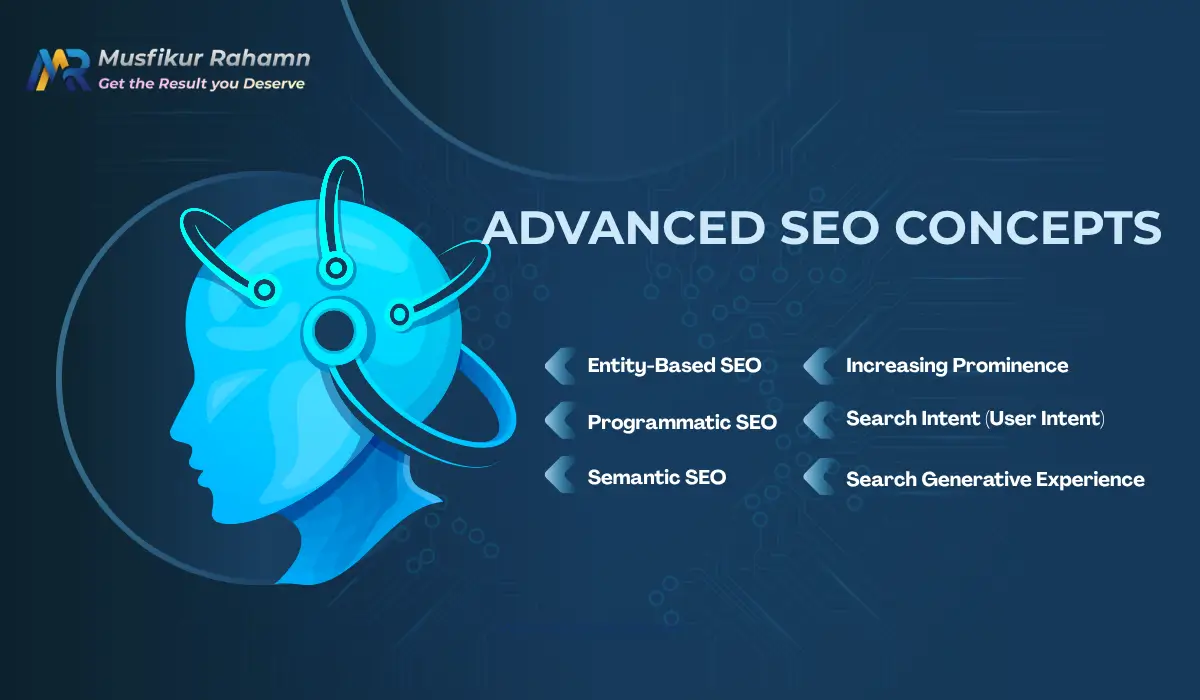
Advanced SEO represents the high-level application of Search Engine Optimization that prioritizes Algorithmic Patterns and Semantic Connectivity. This discipline moves beyond foundational tactics to focus on the complex Entity Relationships that define the Knowledge Graph.
Mastery of these sophisticated mechanisms is essential for maintaining dominance in competitive SERPs where traditional optimization reaches its performance limit. By analyzing Data Structures and NLP (Natural Language Processing), you align a domain with the predictive nature of modern search technologies.
Entity-Based SEO is the strategic optimization of content around uniquely identifiable Entities—concepts, objects, or people—that Search Engine Algorithms recognize as distinct nodes within the Knowledge Graph.
This methodology shifts the focus from character-based string matching to Semantic Relationship mapping, allowing for deeper contextual interpretation. By prioritizing Entity Attributes, you align your domain with the Knowledge Vault, providing a structured framework that defines real-world relevance and Topical Salience.
Prominence is the algorithmic measure of an entity’s importance and popularity within a specific niche or relative to a search query. Search Engine Algorithms calculate this score by aggregating data points from across the web, including Brand Citations, Third-party Endorsements, and the total volume of Branded Searches.
Increasing Prominence requires a multifaceted approach to establishing a significant presence in the Knowledge Vault beyond a domain’s own boundaries.
E-E-A-T is the conceptual framework utilized by Google’s Search Quality Raters to assess the credibility, safety, and informational value of a digital asset.
This acronym represents Experience, Expertise, Authoritativeness, and Trustworthiness, serving as a multidimensional lens through which the Core Algorithm identifies high-quality content. While not a singular technical metric, it functions as a collection of signals that determine the Digital Reputation of an Entity.
Search Intent is the psychological objective behind a search query, interpreted by Search Engine Algorithms to deliver the most relevant Entity. This mechanism ensures that the SERP aligns with the user’s specific stage in the Marketing Funnel.
Modern NLP models, such as BERT and MUM, analyze Semantic Context to reduce Query Ambiguity, allowing the system to distinguish between a user seeking knowledge and a user prepared to complete a purchase.
The primary Intent Archetypes define the structural requirements of a content asset:
Satisfying these archetypes is critical for optimizing Engagement Metrics. When content accurately addresses the Query Intent, it minimizes Pogo-sticking the act of a user immediately returning to the search results and maximizes Dwell Time. These behaviors serve as a Quality Signal to the algorithm, confirming that the page successfully resolved the user’s information need.
Semantic SEO focuses on optimizing content for Entity Relationships and topical meaning using NLP, moving beyond isolated keywords. The strategy is executed through the Hub-and-Spoke model, where a central Pillar Page is interconnected with specialized Cluster Content nodes.
This architecture signals exhaustive coverage of a specific Entity, building Topical Authority within the Knowledge Graph. By establishing a logical Semantic Map through strategic Internal Linking, the domain ensures an efficient distribution of Link Equity and clarifies the thematic relationship between pages for Search Engine Bots.
Search Generative Experience (SGE) integrates Generative AI and LLMs to deliver synthesized answers via AI Snapshots. This framework prioritizes Entity Relationships and Contextual Accuracy over traditional link-based results.
To secure visibility, content must offer high Information Gain—unique data not present in existing results. Utilizing Retrieval-Augmented Generation (RAG), the algorithm selects sources based on Topical Authority and verifiable Citations.
Programmatic SEO is a large-scale optimization strategy that utilizes Automation and Databases to generate landing pages for thousands of Long-Tail Keywords. By using Dynamic Templates and Data Aggregation, this method targets repetitive query patterns (e.g., “Best [Service] in [City]”) at scale.
The core objective is to capture Low-Competition Queries by mapping a Head Term to multiple Modifiers, ensuring high Topical Relevance. To avoid Crawl Bloat or thin content, each page must maintain a unique Data Structure that satisfies specific Search Intent within the Marketing Funnel.
Conversion Rate Optimization (CRO) improves a website’s performance by increasing the percentage of users who execute a specific Entity Action. This process leverages User Behavior Analysis and A/B Testing to eliminate friction within the User Journey.
By optimizing UI/UX elements, CRO maximizes the ROI of organic traffic and enhances User Signals like Dwell Time. This alignment between site architecture and Search Intent ensures that the domain effectively transitions users through the Marketing Funnel.
SEO measurement is the systematic tracking of Key Performance Indicators (KPIs) to evaluate the alignment between a Digital Asset and Search Intent. Primary data acquisition relies on Google Search Console (GSC) to monitor Impressions, Click-Through Rate (CTR), and Average Position within the SERP.
To assess behavioral relevance, you must utilize Google Analytics 4 (GA4) to analyze Organic Traffic, Dwell Time, and Conversion Rate. Furthermore, maintaining Technical SEO health requires the constant observation of Indexation Status and Crawl Errors.
Authority Signals are quantified through Backlink Analysis, which measures the growth of Domain Authority and the quality of referring Entities. These metrics collectively indicate how successfully a website satisfies the Search Engine Algorithm and fulfills user requirements.

Google Algorithm Updates are periodic refinements to Search Engine Algorithms designed to enhance Search Quality and Relevance. These updates, such as Core Updates, serve as mechanisms for redistributing Ranking Signals to favor websites that demonstrate superior E-E-A-T.
Historical updates like Panda, Penguin, and Hummingbird facilitated the transition from simple pattern matching to sophisticated Entity Recognition and NLP. By analyzing Semantic Context, these algorithms identify high-quality Digital Assets while penalizing manipulative tactics.
Consequently, maintaining deep Topical Authority and satisfying Search Intent are the primary methods for ensuring SEO Resilience against ranking volatility.
The History of SEO commenced in the early 1990s as a system of Web Indexing based on Keyword Frequency and On-Page Meta Tags within primitive directories. This heuristic era was disrupted in 1998 by the PageRank patent, which applied Graph Theory to establish Link-Based Authority as the primary validator of Trustworthiness.
The introduction of the Knowledge Graph in 2012 marked a fundamental shift from “Strings to Things,” enabling search engines to recognize real-world Entities and their attributes. Subsequent updates like Hummingbird (2013) and BERT (2019) integrated Natural Language Processing (NLP) to prioritize Search Intent over exact-match queries.
In the current landscape, Machine Learning models such as RankBrain and Search Generative Experience (SGE) utilize Retrieval-Augmented Generation (RAG) to provide synthesized, context-aware responses, redefining the core architecture of Search Engine Optimization.
The relationship between SEO and Large Language Models (LLMs) represents a fundamental transition from character-based keyword matching to high-dimensional Semantic Vector Space. LLMs like Gemini and GPT-4 utilize Natural Language Processing (NLP) to interpret nuanced Contextual Meaning and complex Entity Relationships within a Digital Asset.
In AI-driven search environments, optimized content functions as the primary reference corpus for Retrieval-Augmented Generation (RAG). To maintain visibility, you must shift toward LLM Comprehension by prioritizing Information Gain and highly Structured Data.
This evolution is visible in AI Overviews, which synthesize decentralized information into direct, conversational responses. Consequently, securing verifiable Citations and establishing a dominant Brand Authority are essential for an Entity to be selected as a source by generative agents.
The relationship between Google and the SEO Industry functions as a Symbiotic Ecosystem where each entity relies on the other to maintain Search Quality. Google provides the foundational Infrastructure and the SERP, while the industry supplies the Structured Data and high-quality content required to populate the Knowledge Graph.
This interaction is governed by Google’s Search Essentials, which serve as the regulatory standard for all optimization activities. An Algorithmic Feedback Loop exists where Search Engine Algorithms launch Core Updates to eliminate noise, prompting the industry to adapt through Reverse-Engineering and Semantic Optimization.
Ultimately, both parties share the mutual objective of satisfying User Intent by organizing the world’s information into accessible, verifiable Entities. This continuous cycle of update and adaptation ensures that the Search Index remains relevant and authoritative for the end user.
International SEO is the technical process of configuring a website to enable Search Engine Algorithms to identify specific target countries or languages. This framework relies on a distinct URL Structure to segment global web traffic and establish regional relevance.
You must implement Hreflang Tags to signal language and geographical variations, which prevents Duplicate Content penalties across localized versions of a domain. Furthermore, Topical Authority in foreign markets requires the integration of Localized Keywords and cultural nuances beyond simple translation.
High-performance Content Delivery Network (CDNs) and Server Location serve as additional Localization Signals by reducing latency for specific user clusters. Proper execution ensures that the Search Index retrieves the correct version of a Digital Asset based on the user’s IP Address and browser settings.
Multilingual SEO is the technical optimization of a Digital Asset in multiple languages to achieve visibility within non-primary language SERPs. This methodology requires Localization rather than literal translation to accurately capture regional Search Intent and dialect-specific Entities.
To manage linguistic relationships, you must implement Hreflang Tags, which instruct Search Engine Algorithms on which version of a page to serve based on the user’s language settings, effectively preventing Duplicate Content penalties.
Furthermore, building Topical Authority in international markets involves optimizing for regional N-Grams and adhering to the unique requirements of Local Search Engines, such as Baidu or Yandex. Success in global markets depends on the precise mapping of language clusters within the Knowledge Graph to ensure contextual relevance.
The primary goal of SEO is to maximize a Digital Asset’s visibility and Authority within Organic Search results to capture highly targeted, non-paid traffic. This objective requires aligning a domain’s infrastructure with Search Engine Algorithms to ensure it remains Crawlable, Indexable, and the most relevant source for specific Entities.
Beyond technical compliance, the goal is to satisfy Search Intent and provide substantial Information Gain, effectively moving users through the Marketing Funnel. Successful optimization builds sustained Topical Authority and high E-E-A-T scores, ensuring long-term ranking stability and high Return on Investment (ROI) by eliminating per-click acquisition costs.
The Future of SEO is defined by a paradigm shift from traditional Information Retrieval to Answer Engines and AI Overviews (SGE). This evolution prioritizes Semantic Context and Entity Relationships over isolated keyword density, leveraging Large Language Models (LLMs) to synthesize direct answers within the SERP.
Modern Predictive Algorithms utilize User Context and Knowledge Graph maturity to deliver hyper-personalized results, often leading to Zero-Click Searches. To maintain visibility, you must optimize for Multimodal Search incorporating voice, image, and video data while securing a high Information Gain Score through unique, non-redundant insights.
As search engines transition into agentic assistants, Brand Authority and Verifiable Citations within AI snapshots serve as the primary drivers of digital trust and discovery.
Modern SEO has evolved from simple keyword matching to establishing Topical Authority. To succeed, you must move beyond isolated search terms and focus on creating Topic Clusters that provide comprehensive answers within your niche. To begin your SEO journey effectively, follow this sequential technical workflow:
Step 1: Building a Strong Technical Foundation
Step 2: Understanding Your Audience (Intent-Based Research)
Step 3: Crafting High-Quality Content
Step 4: Optimizing User Experience (UX)
Step 5: Building Brand Authority (Off-Page)
Step 6: Tracking & Continuous Improvement
Becoming an SEO Specialist in 2026 requires a shift from being a general marketer to becoming a Technical Data Analyst and Semantic Strategist. The path involves mastering the interaction between User Intent, Search Engine Algorithms, and Information Architecture. A specialist must be able to translate complex data into a Topical Map that search engines can easily parse and reward with Topical Authority.
The progression starts with building your own Test Domains to validate theoretical knowledge through empirical data. Mastering the tools of the trade such as Google Search Console, Screaming Frog, and Ahrefs is the baseline. However, the ultimate distinction of a specialist is the ability to predict Algorithmic Shifts and optimize for Generative Search Experiences (SGE).
A proficient SEO Specialist must possess a multi-disciplinary skill set divided into three primary pillars:
Essential SEO tools serve as technical Data Acquisition frameworks necessary for auditing Technical Health, measuring Authority Signals, and analyzing Competitor Intelligence. A balanced software stack is required to align a Digital Asset with Search Engine Algorithms and ensure comprehensive Indexation.
By utilizing these tools, you translate raw web data into actionable insights for maintaining Topical Authority and satisfying Search Intent.
SEO learning is an iterative process of monitoring official Algorithm Documentation and Search Patents to identify evolving Ranking Signals. Authoritative knowledge acquisition requires the study of the Google Search Central Blog alongside technical benchmarks from Search Engine Land, Ahrefs, and Semrush Academy.
Mastery in 2026 necessitates specialization in Entity-Centric frameworks and Generative Engine Optimization (GEO), often accessed through specialized communities like LearningSEO.
Analyzing these data-driven results allows you to refine Semantic Mapping and maintain Topical Authority within a volatile SERP. Staying competitive involves a continuous feedback loop between official documentation and empirical performance analysis.
To maintain Topical Authority and stay updated with Search Engine Algorithms, you should prioritize the following official and industry-leading resources:
Foundations of SEO establish the prerequisite framework for achieving Topical Authority and Semantic Relevance within the Knowledge Graph. This discipline functions through a technical stack comprising Google Search Console (GSC), Google Analytics 4 (GA4), and Screaming Frog to facilitate Data Acquisition and ensure total Crawlability.
A successful execution follows a sequential roadmap that transitions from Technical Foundations and Intent-Based Research to the production of content governed by E-E-A-T standards. The core competency of a specialist has evolved from simple keyword matching to Semantic Intelligence and high Data Literacy.
Maintaining a competitive advantage requires an iterative process of providing Information Gain and committing to Continuous Learning from Official Algorithm Documentation. This foundational layer ensures a Digital Asset remains resilient against Core Updates while satisfying the complex requirements of Search Engine Algorithms.
I provide data-driven SEO Services focused on establishing Topical Authority and long-term SERP growth. My methodology ensures your Digital Asset is technically sound and semantically aligned with the latest Search Engine Algorithms.
I am currently offering a Free Site Audit to identify Crawl Errors and a Free Consultation to outline your Topical Map. These sessions provide actionable insights into your Technical Health without any initial obligation.
Table of Contents
ToggleContact me today to schedule a free consultation—let’s discuss your digital challenges and build a sustainable growth roadmap together.